
Today, the Maccabi BY brand represents modern sports facilities, 3x3 streetball and international tournaments. We are building the future, but we remember where it all started. The history of Belarusian Maccabi is a story of passion for sport, strength of character and forward momentum – and it continues to this day.
How It All Began
In the late 19th century, a movement of Jewish sports clubs emerged in Europe. In 1912, these clubs were united in Palestine into the Maccabean Federation. The name was chosen in honour of the Maccabees – the ancient Jewish warriors who symbolise strength, valour and national pride.
In 1921, the Maccabi World Union was officially established, bringing together Jewish sports associations from around the world. From that point on, the movement began to develop actively in Belarus, which at the time was part of Poland.
At the turn of the 19th and 20th centuries, the Jewish population in the cities of Western Belarus was substantial. In Grodno, for example, Jews made up to 40% of the residents, and sport was given considerable attention within the community. It was here that the first Maccabi sports clubs began to appear.
Maccabi in Grodno: One of the First and Strongest
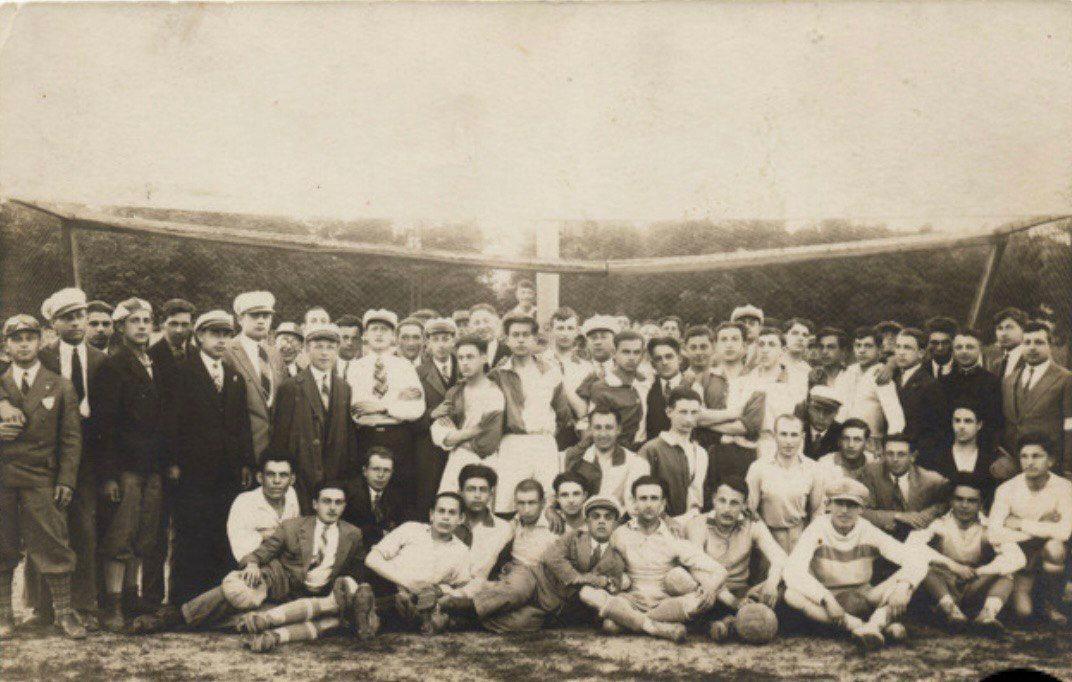
Grodno Maccabi (Żydowski Klub Sportowy "Makabi") was founded in 1922. It was one of the first Jewish sports clubs on the territory of modern Belarus. The team played in blue colours and quickly gained popularity among the townspeople.
Interestingly, due to pressure from the Polish authorities, the club changed its name to "Hasmonea" for a year in 1924, but from 1925 onwards and right up until 1939, it once again competed under the name Maccabi.
The Maccabi football team regularly took part in the championships of Grodno, the Vilnius Football District and the Białystok District Football Union. From 1929, the club became a permanent participant in Class A championships.
The team achieved particular success in 1932, finishing third in the championship with 15 points. Between 1933 and 1936, Maccabi held 2nd–3rd place in their Class A subgroup. In 1937, the Grodno team again became bronze medallists of the Białystok District Championship, and in 1938 they took silver, losing only to WKS Grodno.
Maccabi's best players regularly represented the Grodno select team in friendly matches. For example, in June 1939, in a winning match for Grodno against the Lithuanian champions LGSF from Kaunas, Maccabi defender Shuster took to the field.
Maccabi in Other Cities of Belarus
Clubs named Maccabi existed in almost every city with a Jewish population. Documentary evidence confirms the presence of Maccabi teams and sports societies in Brest, Pinsk, Slonim, Vitebsk and Minsk.
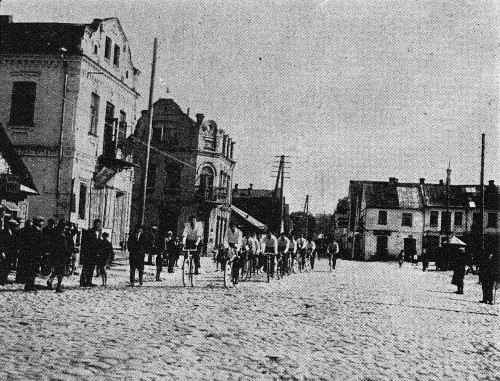
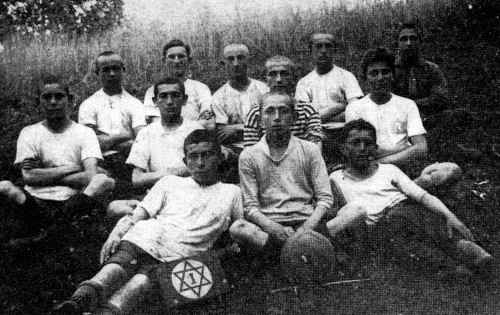
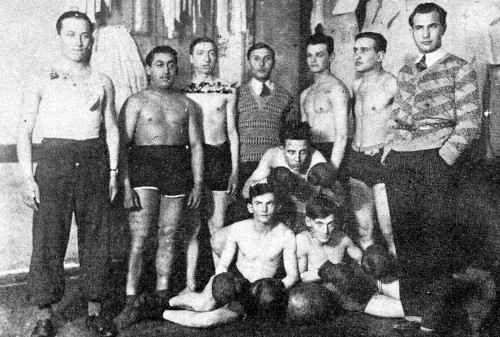
In Slonim, for example, archival materials attest to the active work of the Maccabi movement in the 1920s. Photographs have survived showing the football team, the skiing section and a group of cyclists from Slonim Maccabi. These images are priceless evidence of Jewish sporting life in interwar Belarus.
In Brest and Pinsk, Maccabi clubs were also highly active, drawing young people into sport and promoting a healthy lifestyle.
Sport for Everyone: The Versatility of the Clubs
A key feature of the early Maccabi clubs was their versatility. They were not narrowly focused football or athletics sections. Young people could take part in gymnastics, athletics, swimming, cycling and even weightlifting.
In Grodno, alongside the football team, other sports sections were also active. The club's board was located in the former Radziwiłł Palace on Mostovaya Street, and the Maccabi sports ground was situated in the park behind the Batory department store.
Own Stadiums and Infrastructure
In the 1920s and 1930s, Maccabi clubs in Grodno, Pinsk and Brest not only trained but also built their own sports grounds. These matches drew full stands of spectators – city derbies between Jewish Maccabi and Polish teams (Kresovia, WKS) were hugely popular.
Maccabi played its main matches at the city stadium on Sobieskiego Street 3 (now Zakharova Street). However, the Jewish community had plans to build its own stadium, to avoid dependence on the Polish authorities, with whom relations were not always easy.
Connection to the Global Movement
It is important to note that Belarusian Maccabi clubs were part of a global network. The Maccabi World Union coordinated the activities of Jewish sports societies across Europe, including the territory of modern Belarus.
The clubs exchanged experience and played friendly matches against teams from Vilnius, Warsaw and other cities. For example, in the 1930 season, Grodno Maccabi defeated the Vilnius teams Ognisko (3:1) and Maccabi Vilnius (2:0), and drew with the strong Warsaw side AZS.
Tragic End and Revival
With the outbreak of the Second World War and the subsequent Nazi occupation, the activities of Jewish sports clubs on Belarusian territory came to an end. In Grodno, the Maccabi club ceased to exist at the start of the war.
Many documents and photographs were lost during the occupation. Some images were taken out before the war and are now preserved in archives and private collections around the world.
Today, Maccabi BY is reviving these traditions. We are building a new team, open to athletes of all nationalities. We want to restore the former glory of the Maccabi sporting movement in Belarus and represent our country with pride on both the national and international stage.
The history of Belarusian Maccabi is a testament to how sport unites people, builds character and helps preserve national identity. And this story continues right now.